Superhet Project #1
The Crystal Filter
The plan is to build a simple single-conversion superhet using NE602 as the first mixer, and perhaps also as the second mixer (demodulator), although I might save my small supply of NE602 chips and use a simple home-made diode ring mixer as the detector.
I need an IF filter and plan to try different methods over time, starting simple with a crystal filter of the type that was common until the 1960s...
I rummaged through my component drawers and found very few suitable crystals to use in a first experiment. There were two marked 3496kHz (large case, HC50/U ?) and two small 27MHz. I didn't really want a 27MHz IF, so I went with the 3MHz crystals.
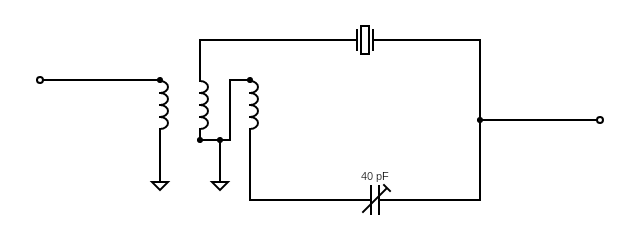
The first iteration of the filter is the design above
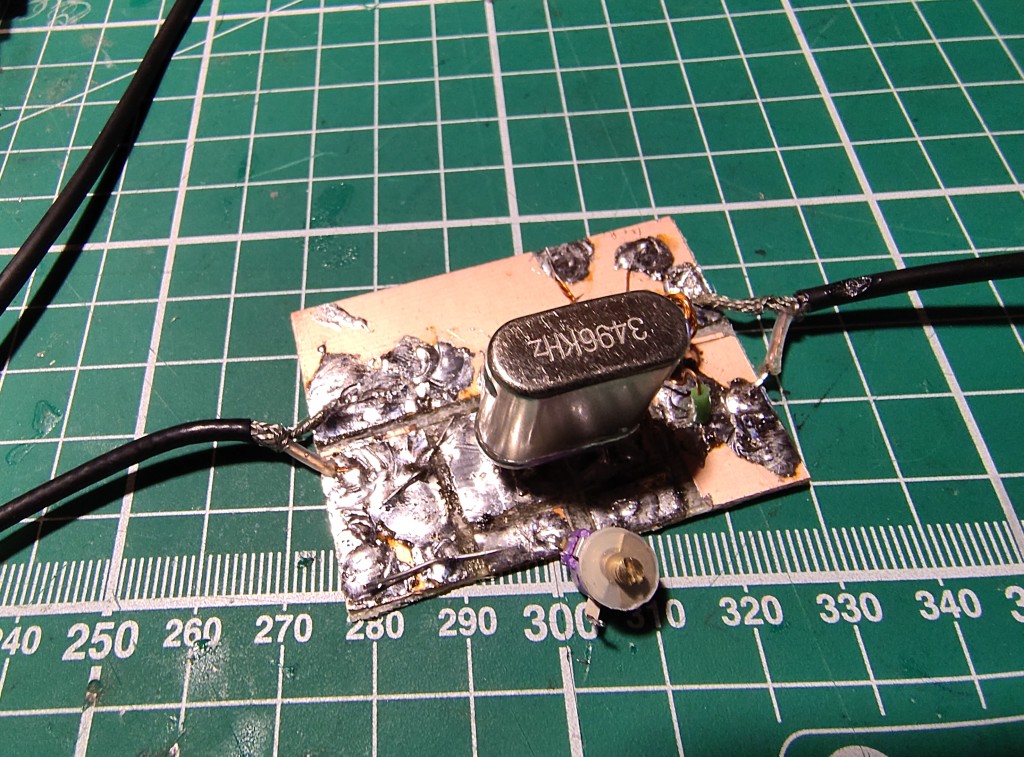
I initially tried sweeping it with my Rigol DSA815 Spectrum Analyzer/Tracking Generator - and it looked rubbish... until I realized that I needed to severely reduce the resolution bandwidth... which greatly slowed the sweep rate... and after a while I gave up and swapped to the NanoVNA, which instantly showed the swept response I was expecting, with a sharp peak and a deep notch to one side or other of the passband peak. .
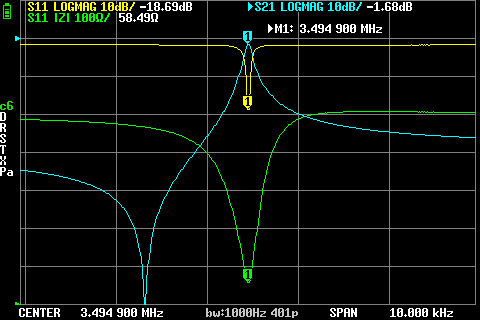
Adjusting the trimmer moves the position of the notch. I decided to find an adjustment that gave a symmetrical response either side of the peak, moving the notch well away LF
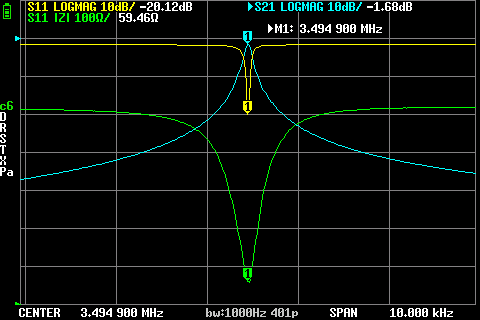
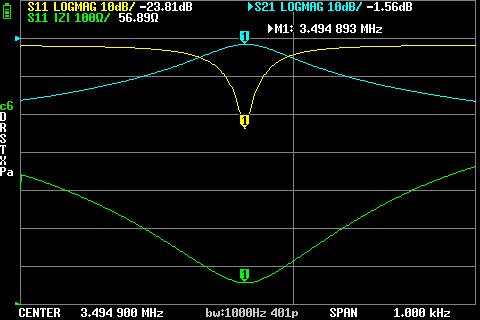
The impedance match was okay without additional input matching - the return loss around 23dB with a |Z| of around 59 ohms.
Passband Measurements
Insertion Loss : 1.56dB
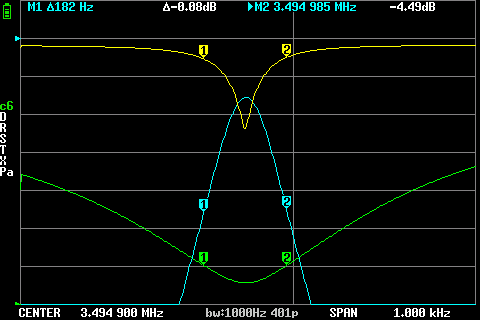
3dB Bandwidth : 182Hz
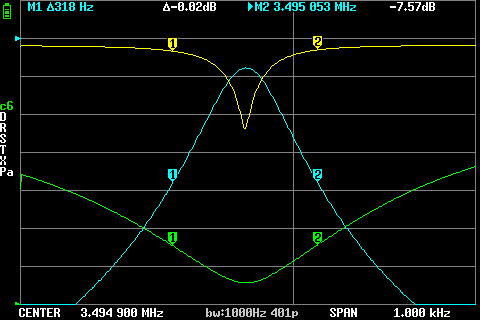
6dB Bandwidth : 318Hz
Half Lattice
I also tried a half-lattice arrangement
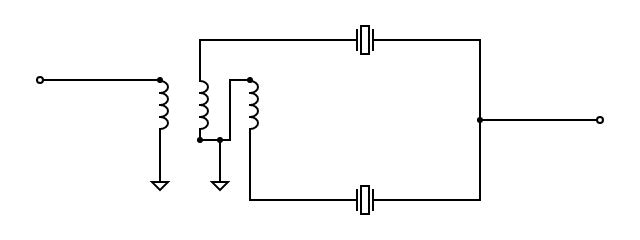
and found that the stop-band attenuation was much greater. The input & output impedances became around 20 ohm and I made small auto-transformers on FT37-43
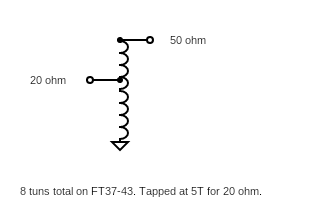 and the input and output matches became better than 18dB.
The response was sharper and I'm not sure how it would sound in a real receiver, and I didn't take any quantitative measurements. For a half-lattice filter I think the xtals should be on slightly different frequencies to give a more defined shape to the passband, rather than a simple peak.
My plan is to use the single-crystal filter at first and see how it performs, and how it sounds on CW signals.
The next iteration should really be a ladder filter of some kind.